 Leichte Sprache

Physical activity is a key component of growing up healthily. It affects both physical and mental health and is much more than just physical exercise.
Targeted promotion of physical activity is active health promotion!
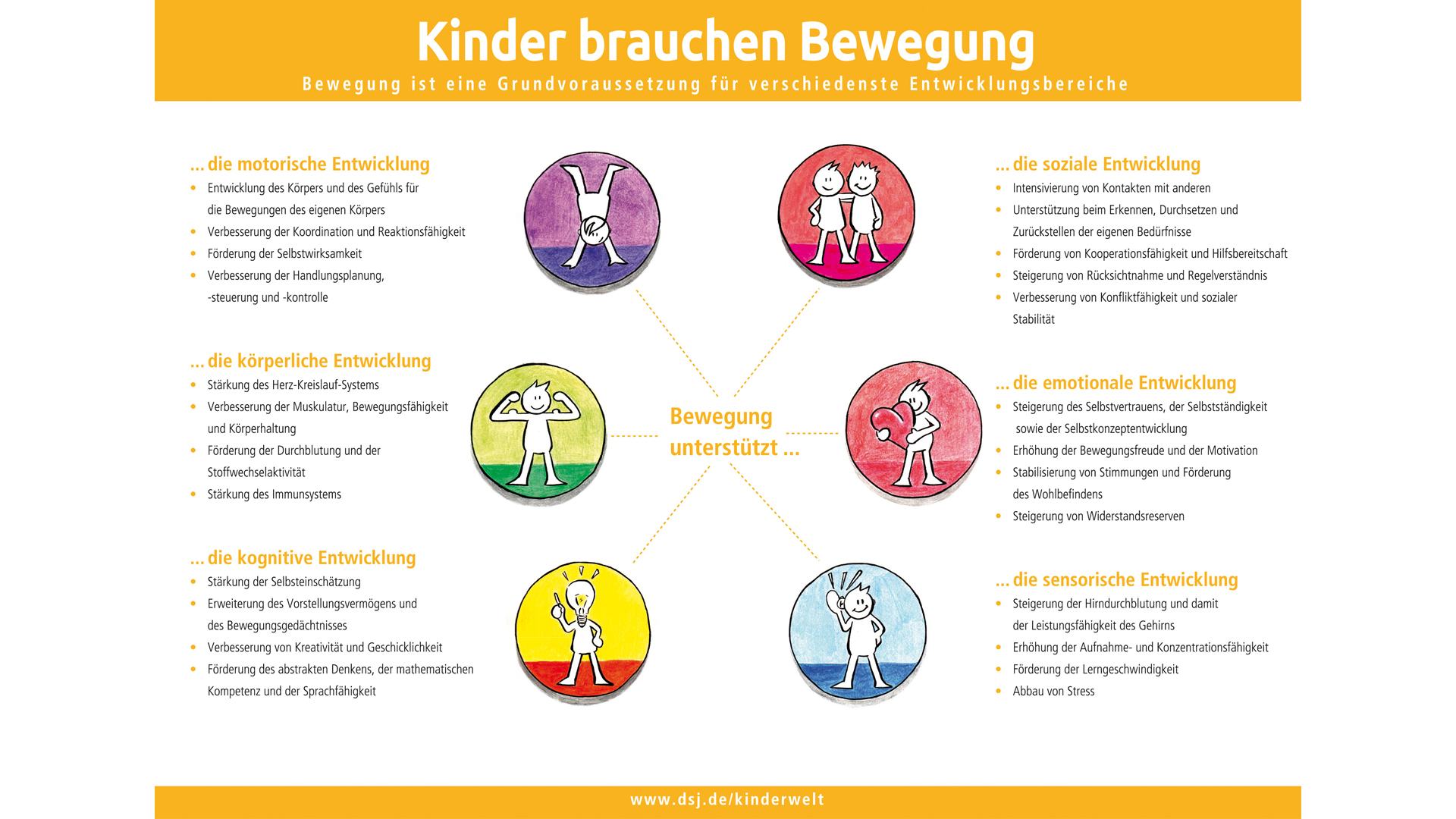
Numerous scientific studies show that regular physical activity not only promotes motor and physical development but also has positive effects on cognitive, sensory, emotional, and social development. Children and adolescents who get enough physical activity are less susceptible to many illnesses—keyword: prevention—have higher cognitive performance, andperformance and develop important skills in relating to themselves and others.
Quelle: dsj/Aaron Jordan