
 Leichte Sprache
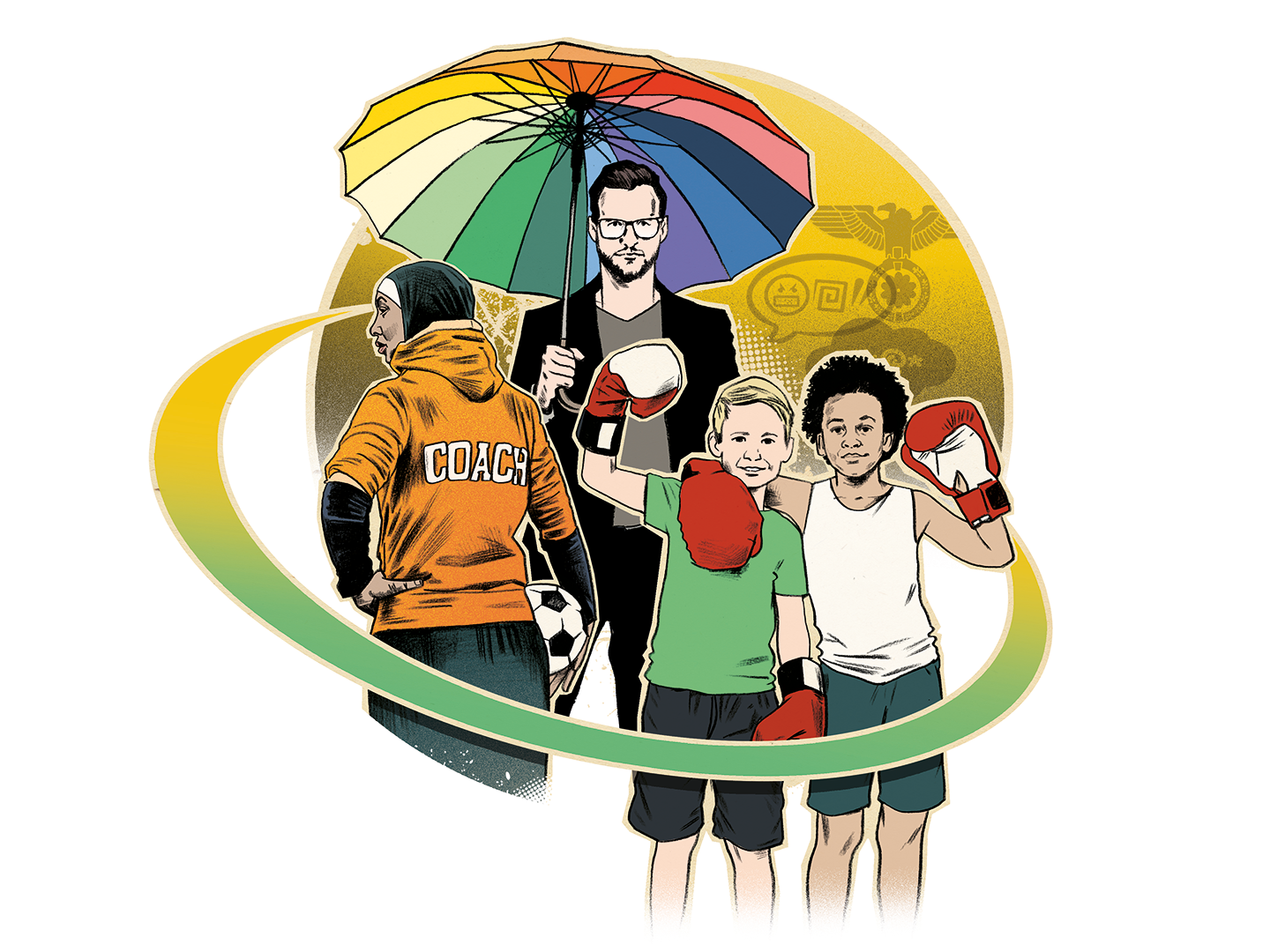
The Diversity Charter identifies various dimensions of diversity—such as age, migration background and nationality, sexual orientation and gender identity, religion, worldview, disability, and social background. These dimensions reflect the realities of young people’s lives in all their diversity.
As a provider of independent child and youth welfare services and as a youth organisation within organised sports, the German Sports Youth (dsj) gives young people a voice. We are committed to integrating diversity into our structures, programs, and attitudes. We make it visible and promote it actively. At the same time, we take a firm stand against discrimination, right-wing extremism, and all forms of group-focused hostility.
The dimension of age is particularly relevant in this context: The dsj represents the specific interests of young people and enables them to be taken seriously and viewed as experts in their own affairs. In a society where decisions are often shaped by an “adultist”* mindset, the dsj provides spaces for children and youth to participate, where everyone can experience sports and actively help shape them. We view diversity as a strength and as a mission to create conditions under which all children and young people can feel equally welcome, safe, and valued.
*Adultism: Discrimination against children and adolescents is also referred to as adultism. The term “adultism” is derived from the English word “adult” and the suffix “-ism,” which denotes a socially entrenched system of power. Adultism describes the power imbalance between children and adults and, as a result, discrimination against younger people solely on the basis of their age. (Adultism – Der Paritätische – Central Association of Independent Welfare Organisations)
![[Translate to Englisch:] Illustration einer Sportmannschaft, die eng zusammengestanden im Kreis die Arme ineinander legt. Das Motiv steht für Teamgeist, Zusammenhalt und gemeinsames Engagement im Sport.](https://static-dsj-de.s3.amazonaws.com/_processed_/4/8/csm_team-sport-zusammenhalt-jugend-mannschaft-illustration_PM_Hoffmann_783f166f85.jpg)
![[Translate to Englisch:] Illustration einer Wand mit Schriftzügen gegen Rassismus sowie Symbolen für Gemeinschaft und Zusammenhalt. Im Vordergrund spielen zwei Kinder Fußball. Das Motiv steht für Vielfalt, Respekt und gemeinsames Miteinander im Sport.](https://static-dsj-de.s3.amazonaws.com/_processed_/8/1/csm_anti-rassismus-vielfalt-jugend-sport-miteinander-illustration_PM_Hoffmann_0b109bf825.jpg)
![[Translate to Englisch:] Illustration verschiedener sportlicher Aktivitäten: Mehrere Kinder und Jugendliche bewegen sich gemeinsam, darunter Hockey, Basketball und Sport im Rollstuhl. Das Motiv steht für Inklusion, Vielfalt und gemeinsame Teilhabe im Sport.](https://static-dsj-de.s3.amazonaws.com/_processed_/0/5/csm_inklusion-sport-jugend-vielfalt-bewegung-illustration_PM_Hoffmann_cd61d6e8e1.jpg)
![[Translate to Englisch:] Illustration einer Gruppe von Menschen mit Fahne und Plakat gegen Rechtsextremismus. Das Motiv steht für Vielfalt, Solidarität und gemeinsames Engagement für Demokratie im Sport.](https://static-dsj-de.s3.amazonaws.com/_processed_/9/2/csm_vielfalt-gegen-rechtsextremismus-jugend-engagement-illustration_PM_Hoffmann_cd6769fb55.jpg)